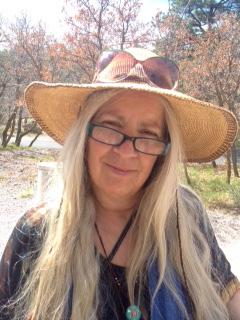
“It is inconceivable to me that an ethical relation to land can exist without love, respect, and admiration for the land, and a high regard for its value. By value, I of course mean something far broader than mere economic value; I mean value in the philosophical sense.” – Aldo Leopold, Sand County Almanac
The weatherman said the monsoon patterns would return again in mid-august. He was right! August brings those hot days when the clouds stop rolling in. The days stretch long. Some days the temps cook us into the evenings… We know those days are coming. As Sylvia Plath said. “August rain: the best of the summer gone, and the new fall not yet born. The odd uneven time.” It kind of feels that way… an odd uneven time this year. Of course the monsoons are welcomed. Yet, we know the heat will return. We soothe ourselves knowing that September will also come.
Projects in my little village continue to follow designers’ ongoing creations of asphalt and concrete. They resisted implementing permeable surfaces and, hence, created big heat islands. To me, these designers overuse concrete and asphalt, while ignoring the water-managing service of plants. They may feel these fossil fuel heavy projects are cheaper, but in the long run, such projects can cost us much more. Heat islands cost money and cost lives. My brother, Mark, said this about the new bio-swales in Hiawatha Gardens parking lot: “Concrete bio-swales are a non sequitur.” That’s what we got, an oxymoron, a contradiction of terms. More concrete and asphalt doesn’t help a warming planet. However, business as usual appears to be the order of the day in the village. Concrete and rocks do not make a bio-swale that works with nature, but a water system that doesn’t understand the ‘bio’ part of the system. That short-changes our suburban forest.
Seems to be a designers’ fear or hesitancy to install smart, permeable surfaces. Almost as if they are defending what designs have occurred in the past, rather than take a corrective step in designing for the future. Maybe they are in denial of the future that is coming. We are living with that denial now. Today. Meanwhile science tells us that things are going to get harsher and rougher in the future. Gotta work smarter and harder while we can!
Another designer example would be those new traffic-slowing bump-outs, installed with the creek walk. Those could have been designed to utilize big rains while slowing and absorbing run-off waters – reducing flood water. Such a simple, but effective, system helps the trees with water needs, cleans the water through the soil and reduces water pouring into Fountain Creek. Such systems are a solution for thirsty root systems. Such systems are designed to improve things for nature, not control nature. Currently those trees are cemented into concreted ‘islands.’ Those trees need people to water them manually for life support. Those trees are denied rainfall’s abundance. To me, this seems like a missed opportunity to honor water, conserve water, help trees and improve the situation. Perhaps they could retrofit it. I keep waiting for my community to step forward and ask for more natural, earth-smart solutions. There are many opportunities for resilience to rise from using sustainable solutions. Utilizing rain runoff is just one of many examples that work to mitigate climate changes.
We can fight back against heat islands with closed canopy suburban forests… Another opportunity. For instance, silver maple trees offer many habitat opportunities to the birds, bees and wild ones. They can freely sprout, waiting to be transplanted into holes in the forest. I remember Tim Phillips who planted many of these older giants, now maxing out in age. He was a true Manitou character, and worked for years for the town. Tim was always friendly, smiling that crooked smile and checking on the forest we lived in. Tim loved a silver maple. Willing trees. He took care of them well.
I believe the city could plant more silver maples, along with the other trees. Using the seed bank we have, we could plant the local maple’s seeds and grow maples that are adapted to this area. Yes, they are not native to this place. But, they are fast growing and can provide a renewable protective cover for us providing shade and even more shade. They have a golden autumnal display that translates into soil-building leaf cover for the winter. Improving the resilience of the ecosystem we live in just seems smart to me.
Cassowary birds, in Australia, are big, tall and leggy. They are modern dinosaurs. Cassowaries are often found sleeping in rotted downed trunks in Australia’s forests. Here at the foot of Pikes Peak in Manitou, we have zero idea of what animal would be sleeping inside the rotting trunks of trees because tree ‘maintenance’ doesn’t allow for that. We don’t allow for downed, rotting tree trunks. Only part of a tree’s life cycle exists for Manitou… just the green part. It seems there is no thought about the rest of a tree’s natural life cycle.
Decomposition is not what the village allows to happen. It isn’t on their radar. Yet, decomposing trunks provide ‘bottom of the food chain’ food into the ecosystem. Decomposing trunks build soil. Decomposing trunks hold water and can reduce runoff. Decomposition is a part of the ecological cycle and should not be discarded. It is needed to have a complete ecosystem. So, we don’t know what animals we may be excluding or impacting. Would it be bears? Gray foxes? Raccoons? Bees?
Silver maples make great habitat opportunities. Over the years, I have witnessed coons, squirrels (of course), numerous birds, songbirds, owls, woodpeckers, and even witnessed an active bee colony living in a silver maple in the cemetery. A peaceful place for a wild bee hive. I speak for the old trees because they provide needed shelter for our beloved wildlife. Maples are solid growers and they enhance the suburban environment. Silver maples could be protecting the slower growing trees, while providing shade to the people and habitat for the animals. I am just saying. Trees can make fast change and the wildlife will benefit. I vote for more trees.
Other nice trees for a hotter future are the honeylocust, Kentucky coffeetree, catalpa or golden raintree. Just a few favorites. Hackberry is another drought tolerant tree and the bur oak, too. Both are giants. Both are slow growers. Both are native trees.
Rock ‘mulch’ creates a hotter environment. Any plant in rock mulch will want more water and especially in the heat of summer. It is going to get hotter on the planet. We are beginning to feel it. We are beginning to adapt ourselves. Let’s stop with the rock mulch!
On a job, a towhee hopped inquisitively about a fresh hugelkultur project. ‘Surely a meal could be found here!’ Turned soil, leaves, slash, and soil again, layered and topped with mulch… We saw lots of worms. Found a tiny snake. A lizard. Rocks laid out on contour. We surrounded the plants in soothing, cool mulch. No rock mulch. No rubber mulch. No concrete needed and towhee approved. Hugelkultur can reduce stormwater costs by putting water back into the soil, not allowing it to run off. If only the village could get the gist of using nature, working with nature to live in nature.
Fire mitigation is another facet of sustainability and resilience that citizens are concerned about. There is a fresh effort by citizens – Manitou Wildfire Resilience – working to pull the community together in the different fire zones. What Fire Zone do you live in? Michael and I live in Zone Four. Manitou is in a fire-sculpted ecosystem. Fires are part of our region. We should expect them. The citizen effort wants to step up caring for our neighbors and our community. But, again, what are the best practices?
I was reading an article about fire mitigation research. Some of these researchers are convinced we remove too many trees in our effort to ‘stop’ fire. Removing so many trees could dry out the soil; exposing the ground to full sun and drying the entire area, perhaps making it more vulnerable to burning. That is their hypothesis. It is an on-going study. We keep learning as we go. The local Loraxes need to stay up on it. Manitou does need to continue mitigation. I can only hope they are watching out for bird nests in those trees (federal law). I hope they leave the biggest trees to store the most carbon. Every cut tree releases carbon, unless the wood is buried. Buried, the carbon is locked in the soil for a long, long time. We can hope for a new diverse succession of trees to continue the forest properly. We can only hope that the ‘maintenance’ for our forests, going forth, is nature focused, not speed focused or convenience focused.
As a community we need to talk to one another about what may shift here in the next ten years? Now is when we should build needed infrastructure in anticipation. I have difficulty understanding why ‘business as usual’ is the game. I guess that is the easiest route. But, as an environmentalist, I feel the urgency of the planet and the climate challenges we face. Not decades away, but now. Now is when we need creative solutions, not business as usual. Who benefits from not being progressive for our environment? We need to take the steps forward, not drag and lag. Step by step. Poco a poco. Who benefits from business as usual? Who gains? Fossil fuel companies? Well-heeled corporations? Who loses? To me, the future loses. We need to reintroduce nature and the character of Manitou Springs to our government again. I wish Rockey was still here speaking for the trees. I wish Kathy Verlo was still singing in Council and visioning a greener Manitou…
As the community, we need to speak up for the trees and nature. We need to learn how to allow the land to support and feed us. How can we help our land to thrive? I see Manitou as a village. I prefer a village (a small community in a rural area) to a town (referring to a walled or fenced place.) We certainly are no city! (City: an inhabited place of greater size, population, or importance than a town or village) Give me a village! A village can live in the wilds. A village can plant a food forest in the parks for people and nature. A village is small enough to be personal and walkable. Where people can know and recognize other villagers, making it ‘talkable.’ A village can be open to nature – no walls. A village can tolerate a wilder forest. A village is small enough to be wise.
Give me the village. I don’t need or want more technology. I don’t need AI. I try to avoid it. AI has no pulse, has no soul. AI has no connection to the natural world. We have seen just the tip of the iceberg of damage that comes with it. Within a few decades our world turned away from the natural world into a screen leading to an inner world of clicks and links. An invisible structure, permaculturists would say. A powerful one. My other brother, Tom, said it well. “Too much screen between you and the world can turn a window into a wall.” Rings true for me. Give me a peaceful village that can manage what nature brings by using nature’s brilliance to offset and mitigate conditions!
Partly cloudy with the temperature at 85 degrees Fahrenheit. August is still here. The moisture is tangible in the air. No rain in the forecast, but perhaps. Perhaps. Late summer heat will surely return after the cool relief of the monsoon. May monsoons continue to rescue us from the summer heat. Year after year. That is a weather pattern I do not want to lose. I do try to maintain a Lorax position of speaking for nature and the trees. And, I like to offer prayers. Prayers for the continuing of our natural cycles. Prayers for the monsoons. Prayers for the trees. Prayers for the people. Peace and promise. Blue Planet Becky.
The change always comes about mid-August,
And it always catches me by surprise.
I mean the day when I know that summer is fraying at the edges,
That September isn’t far off and fall is just over the hill or up the valley
Pikes Peak Permaculture is an educational nonprofit.
Step by step. Show a shift. Be the change. Design your solutions!
pikespeakpermaculture.org
The most significant act of urban and suburban permaculture is restoring a balance
between human society and nature.
~~~~
“Our responsibility is to put our house in order.
Should we do so, there will never be any need to destroy wilderness.”
— Bill Mollison, father of permaculture
~~~~
The weather turned cooler after the storm. Real August weather…
The days were brisk and clear and blue, and the nights were chilly.
As the chorus of the crickets and the katydids died down to a mere murmur,
people talked of an early frost. ~Gerald Raftery, Snow Cloud, 1951
Everything Gardens!