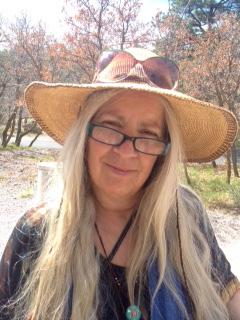
“It was one of those March days when the sun shines hot and the wind blows cold:
when it is summer in the light, and winter in the shade.” – Charles Dickens
In the night of March 3rd, the moon was hidden behind the clouds. Yet somehow, the lunar eclipse in the earliest of morning hours was visible with a rosy bloom of color. Astronomical events reach out and touch us in this earthly life. The display of moon phases, sunrises, cloud banks, lightning storms, shooting stars… They bless us with their awe inspiring, magical spectacles.
A few days later, the clouds opened up and gave Manitou many hours of nourishing, sweet rain before soft snow would fall. Mid morning, the snow was 5 inches deep but melting so fast! Spring, 2026, is as early as one can remember. Here, the fruit trees are not blooming, but one can feel them preparing to pop. The maple stands in full bloom. It feels early.
The next morning we were out for coffee… There, under the pruned-back lilacs, little sparrows were nice and dry, under a solid hat of snow on the shrub top… protecting them. They sat in the sunshine and warmed up for the day. Sparrows are pretty darn cute in their feathery community. A spat broke out in another bush, and they all flew over to give their support in the argument. Love that happy chatter. The sparrow village out front often has brawls breaking out of cheeping, chirping, and squabbling. Little brown birds are not to be messed with.
When I sat on the Council, 2015 – 2020, we tried hard to hold to sensible ideas that felt best for the community. The notion of local services and patronizing local companies was one such idea. Local knowledge, local brilliance, local economy. Now, just six years later, a phone call came through for my Manitou residence from Missouri. That woman knew nothing about Manitou but was part of a national corporation. Through her, I was informed further about the company that was awarded the work. Yes, it was a national corporation that outbid all the local companies. The cheapest. This company knows little to nothing about our community. And the million-dollar project will not feed into local pockets, but will leave us to feed others elsewhere. It is doubtful that they care about Manitou beyond the million dollars.
Local companies that pay local salaries and purchase local supplies are left in the cold. Our tax money leaves the city… Do we not have companies that can consult, design, replace, install, repair and report on such projects? Surely we do! The response from the city was that the cheapest bid on the project was the goal… To me, going with the cheapest is not the way for a community to be supported by their government. Keeping money circulating locally is.
There are many economic perks to ‘going local,’ and especially for the local folks to get the money in their pockets. Local companies will circulate to the suppliers and the stores, pay out payroll and the local economy responds. They pay taxes here, they represent their work accomplished and the whole community benefits. This time, the City’s understanding of ‘local first’ fell to the side with not even a whisper. It is so disappointing.
“It is very rare that cheap decisions will make great impact.” ― Jonathan Heimberg
After the snow, winds returned to suck the moisture away and bluster the dust everywhere. Many of us remember the drought of 2002. The winds of 2002 never seemed to stop blowing. This year, 2026, the drought is winning at the moment. So dry, even after a good snow. Unless one has built sponge soil, utilized water and soil conserving practices and prepared for drought, the drought will win. Gardeners are merely soldiers on the battlefield running about with our water cans and buckets. But, I feel that plants hold their own intelligence, and can adapt themselves to less water. That is a perfect adaptation for the future… less water needs. We gardeners and farmers will stay on the front lines…
Dark clouds of social upheaval are in the air, along with the dust on the winds. I find visiting nature soothes my soul and reminds me of the long view of time on the planet. This too shall pass. Thank goodness I have a garden to get lost in… Outside, trees and shrubs are leafing out their tiny leaves, elm shoots are up (and tasty!), bulbs are blooming, and birds are going spring-crazy! The flickers have returned for their next clutch of babies. Magpies are up in the top of the big neighborhood ponderosa, making a ruckus.
They have discovered the feeders, going after the suet and peanut butter. They are pretty big for the feeder, but they manage to perch on a shrub and stretch over for their treats. Nuthatches have been working on the old maple stump, getting the grubs that may be moving about on the warm days. Now I see the apricot has popped open blooms. Hummers will be here soon, I’d expect. Bears are reported to be about as well… Seems normal, if a bit early, but climate change will be an on-going adaptation.
Just recently, in the middle of the night in the light of the last quarter of the moon, a great horned owl flew into the elm tree next door. “Hoo-hoo, hoo, hoo, hoo…” It was calling out for other owls. Owl talk. Such a deep, but so soft, calling. It gave a beautiful cast into the night. It moved around the trees, only the big trees, in the neighborhood. Owls don’t bother with smaller trees. It continued up the drainage seeking companions in the night. Taking his hooting calls with.
Spring feels early, while the owls seem to be late… And perhaps they are adapting as well. Just to hear an owl, living as a wild creature in this world, is something to hold dear. Each wild contact, each wild touch, every wild song or wild call heard are gems to remember and hold dear. Blessings from the wilder world. May we keep Nature safe. May we find safety and hold tight the world in this time of war. Peace is the way forward. No one wins a war… Peace. Blue Planet Becky the gardener
“Our life is March weather, savage and serene in one hour.” ― Ralph Waldo Emerson
Some chores for March
Cut back the stalks of last year – chop and drop them onto the soil, feeding the soil for this year. This year, with the warmer weather, starting seeds outdoors, for the hardy plants, would be a step forward. If we get frozen out in April, we have not lost anything and would just revert back to‘business as usual’ for Colorado. But if we don’t have a cold snap, we could be planting a bigger harvest come fall. Plant peas and arugula, beets, squash… what do you want to eat? Go ahead and give into the opportunity. Not just food,
“Dad, how do soldiers killing each other solve the world’s problems?” ― Bill Watterson, Calvin & Hobbes
An undeclared war has opened up like a wound on the planet.
We feel that wound in our hearts. Hard to bear on a daily basis. The energy and sorrow wraps around the globe and we all feel it. We aren’t the ones being bombed… yet. So many innocent deaths being tallied up. Aren’t we all children when it comes to death and dying? Thinking about death that way, like children, we are innocent in our faith when responding to what presents in death. In that final moment, there is no time for second thoughts, final words or goodbyes. Death comes in a flash.
Whether the final moment follows a long, drawn-out, and daunting struggle with life or =boom!= Death takes one without warning. I believe the moment of actually leaving the body is in a flash, like simply going through a door opened only for the one passing. Thank goodness for my beliefs, but there is no salve for the pain of the lost lives and spirits taken in war. Prayers for the lost lives and the damages done…
“There is no flag large enough to cover the shame of killing innocent people.” ― Howard Zinn
Things we can do to improve the world and be ready for change:
- Focus on areas of life where you have power – live locally.
- Gather with your friends and your community.
- Turn off the power, light candles and stay home without the rest of the world… re-ground yourself.
- Pursue your hobby… Reclaim yourself, your time and your love. For me, it is the garden. For you?
- Speak truth and not just to power. No one can take away your truth.
- Create rather than consume. Tap into your direct connection to the divine. Sing, Dance, Make art!
- Find beauty everywhere.
- Grow food for yourself and your neighbors.
- Celebrate the moments. Take care of you and your community. Get out in the sunshine. Walk the hills. Listen to the spring opening up outside the windows…
- Keep centered on what it means to be human.
“All war is a symptom of man’s failure as a thinking animal.” ― John Steinbeck
Tom Elder – Earth as Garden
Tyger, Tyger By William Blake
Tyger Tyger, burning bright,
In the forests of the night;
What immortal hand or eye,
Could frame thy fearful symmetry?
You get the idea from the poem that Blake valued the fearsome tiger, and that somehow that “monster of God” said some- thing important about its Creator.
There is a widespread idea that environmental- ism, concern for Earth, is anti-religious. Really? Religious people have every reason, backed up by their holy texts, to value and protect the Creation.
Since we live in a culture that is dominated by Judeo-Christian traditions, that’s all I’ll speak to. People from other traditions can make their own arguments. People with no particular religious feelings can do the same. It is a religious obligation to take care of the people of Earth. How we treat Creation will dictate the quality of life for countless human beings, now and in the future. So, the first reason for environmental concern is simple enlightened self-interest.
Science provides the raw material for decisions. Data, logic, and the process of science are without politics, and cannot say, “Well, you should do this,” or “This practice is bad.” But science CAN say, “If humans do this, then here is what the probable result will be… (followed by a description). Do you want that result?” Science cannot tell us what we should do, or not do.
We should listen, in order to make good decisions. If the facts show us that something is harming Earth, and the consequences will harm people, then it is a moral obligation to see if we can stop that self-harm. But that is a pretty selfish, bloodless reason to care about the Creator’s Earth. There are other, explicitly religious, reasons. In the first chapter of the first book of the Bible, Genesis 1, it reads, “God saw all that he had made, and it was very good.”
That does not seem to mean that all that surrounds us is just raw material for humans, with their only value being what we can get from them. God made the ferocious tiger for God’s own reasons, and the tiger was “good” just by being. Earth has existed for hundreds of millions of years, populated by creatures we will never see, and it was “good” throughout, all the way up to the time we came on the scene.
To treat that “good” Creation with casual thoughtlessness or con- tempt doesn’t seem like the correct response. Genesis 2 reads, “The Lord God took the man and put him in the Garden of Eden to work it and take care of it.” “Stewardship” is the word that people use to describe that role. It is a command to love the Creation. And by that I don’t mean to get all gushy and emotional about it (though that’s okay). To love something is to wish that thing to prosper, and to work for its well-being, and preserve it. It is not love to knowingly force the extinction of other species, or to corrupt the air, soil and waters of Earth
The idea of Earth as a garden is right there at the beginning of The Book. We are all gardeners. That fits very well with many people’s religious beliefs. I don’t speak for God on particular issues, because that would be irreverent and presumptuous, and I could be wrong. But it is very wrong to pretend that God doesn’t care about how we treat Earth. God obviously loves Earth and ALL its inhabitants.